















Geographic center of North America
The town of Rugby has long claimed to be the geographic center of North America.
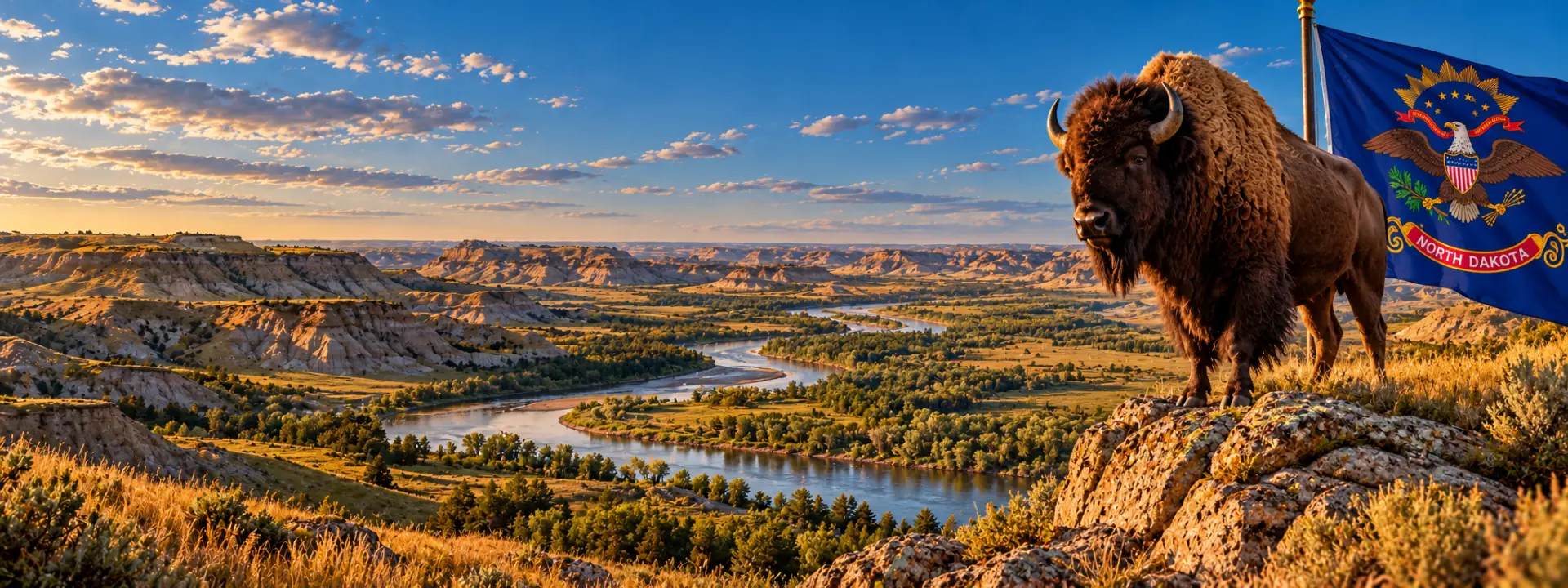
North Dakota is a Northern Plains state of about 796,000 residents whose economy was transformed by the Bakken shale boom: since 2012 it has been the second- or third-largest oil producer in the United States, pumping roughly 1.2 million barrels a day from the Williston Basin. Alongside petroleum it remains an agricultural powerhouse — first in the country for spring wheat, durum, canola, dry edible beans, honey and flaxseed — and it hosts Grand Forks and Fargo as university, healthcare and technology centres. It has the highest share of Norwegian ancestry in the nation, one of the lowest unemployment rates, and a Legacy Fund of oil royalties worth more than $11 billion. Lignite coal still generates about half of its electricity while wind supplies more than a third, one of the highest wind shares anywhere in the U.S.
The state’s essential figures from the latest official data
Official information organized by subject
How many people live here, how it's changing and who they are.
Home prices, rents, supply and how affordable it is to live here.
GDP, income, output and the industries that drive the economy.
What it really costs to live here: housing, food, utilities and more.
Employment, unemployment, salaries and the labor force.
Crime rates, violent and property crime, and public safety.
Schools, universities, attainment and graduation rates.
Life expectancy, healthcare access, hospitals and insurance.
Income, property and sales taxes, plus overall tax burden.
Foreign-born population, origins and migration flows.
Electricity prices, production, renewables and consumption.
Air quality, wildfires, drought, water and emissions.
Vehicles, public transit, airports, traffic and commuting.
Election results, representatives and voting trends.
Poverty, food assistance, Medicaid and social safety net programs.
Older population, Social Security, retirees and senior living.
Farms, farmland, crop and livestock output and agricultural exports.
Visitors, tourism spending, national and state parks.
Patents, R&D spending, venture capital and tech employment.
Film, TV, music, theaters, museums and the video game industry.
Pet ownership, shelters, adoptions and veterinary services.
Explore North Dakota
Select a county to compare population, income, housing and territory using official U.S. Census Bureau data.
North Dakota, United States
County seat: Fargo
ACS 2023 5-year estimates · Census Gazetteer 2023. Unemployment is calculated from the ACS civilian labor force.
53 counties · choose how to order them
Curious facts about North Dakota
The town of Rugby has long claimed to be the geographic center of North America.
Production from the Bakken formation made North Dakota one of the largest oil-producing states in the U.S.
Theodore Roosevelt National Park preserves the Badlands where the future president ranched in the 1880s.
The Bank of North Dakota, founded in 1919, is the only state-owned general-purpose bank in the U.S.