
Vehicles
Personal vehicles dominate transportation in North Dakota, where long distances between towns and limited public transit make car ownership essential.
Households without a vehicle
2006–2024Census American Community Survey 1-year estimates, B08201 (2020 not released).
| Indicator | North Dakota | U.S. |
|---|---|---|
| Public Transit Commute Share (%) | 0.5 | 3.1 |
- •Fewer than 1% of North Dakota commuters use public transportation, one of the lowest shares in the country.
Public Transit
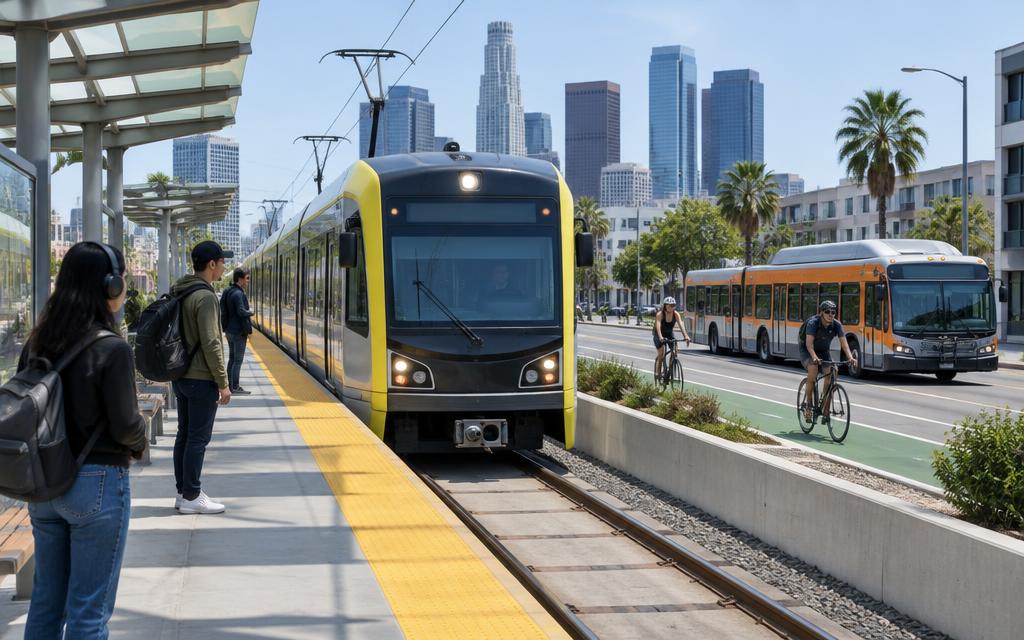
Public transit usage in North Dakota is minimal, with less than 1% of commuters using transit, reflecting the state's rural character and dispersed population.
Workers commuting by public transit
2006–2024Census American Community Survey 1-year estimates, share of workers 16+, B08301 (2020 not released).
| Indicator | North Dakota | U.S. |
|---|---|---|
| Public Transit Commute Share (%) | 0.5 | 3.1 |
- •North Dakota's largest cities operate small local bus systems, but statewide transit ridership remains under 1%.
Airports
Hector International Airport in Fargo serves as North Dakota's busiest air travel hub, connecting the state to major national destinations.
Passengers boarded at all commercial airports in North Dakota
2011–2025FAA Air Carrier Activity Information System, calendar-year commercial-service enplanements.
Passengers boarded at Hector International (FAR)
2011–2025FAA calendar-year enplanements.
| Indicator | North Dakota | U.S. |
|---|---|---|
| Largest Airport Annual Passengers (millions) | 0.9 | 5 |
- •The University of North Dakota runs the largest civilian pilot training program in the United States.
Traffic
Traffic congestion is minimal in North Dakota, with its low population density and short commutes keeping roadways largely uncongested.
Traffic fatalities
1994–2024NHTSA Fatality Analysis Reporting System (FARS), State Traffic Data.
Fatality rate per 100 million vehicle miles
1994–2024NHTSA Fatality Analysis Reporting System (FARS), State Traffic Data.
| Indicator | North Dakota | U.S. |
|---|---|---|
| Average Commute Time (minutes) | 17.5 | 26.8 |
- •North Dakota consistently ranks among the states with the least traffic congestion nationwide.
Commuting Patterns
North Dakota commuters enjoy some of the shortest average commute times in the nation, reflecting the state's low population density and limited traffic congestion.
Mean travel time to work
2006–2024Census American Community Survey 1-year estimates, aggregate travel time ÷ workers not working at home, B08013/B08012 (2020 not released).
Workers who drive alone
2006–2024Census American Community Survey 1-year estimates, share of workers 16+, B08301 (2020 not released).
Workers who work from home
2006–2024Census American Community Survey 1-year estimates, share of workers 16+, B08301 (2020 not released).
| Indicator | North Dakota | U.S. |
|---|---|---|
| Average Commute Time (minutes) | 17.5 | 26.8 |
- •North Dakota and South Dakota share the shortest average commute times of any US states.
Infrastructure
North Dakota maintains an extensive public road network relative to its population, supporting its agricultural and energy industries across long rural distances.
Bridges in poor condition
2000–2025FHWA National Bridge Inventory, Bridge Condition by Highway System (as of June each year).
Bridges in good condition
2000–2025FHWA National Bridge Inventory, Bridge Condition by Highway System (as of June each year).
Total highway bridges
2000–2025FHWA National Bridge Inventory, Bridge Condition by Highway System (as of June each year).
Vehicle miles traveled
1994–2024FHWA vehicle miles traveled as published with NHTSA FARS (fatalities ÷ fatality rate per 100M VMT).
| Indicator | North Dakota | U.S. |
|---|---|---|
| Road Miles per 1,000 Residents | 68 | 13 |
- •North Dakota has one of the highest amounts of public road miles per resident of any US state.